




Before comparing anything, you need to know that composite is not a product. It is a category, and it contains at least three materials that behave differently, cost differently, and fail differently.
That ambiguity is why homeowners collect three siding quotes and cannot line them up. One bid says composite and means fiber cement. Another says composite and means engineered wood. They are not the same purchase.
Sort that out first, then the rest of the comparison becomes straightforward.
What “Composite” Actually Means
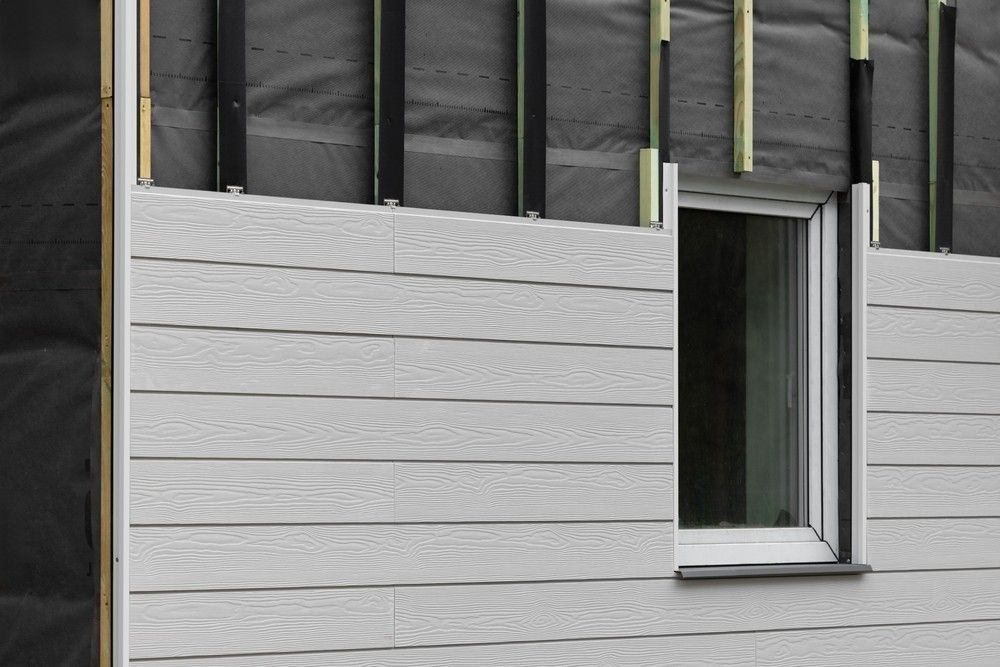
Fiber cement. Portland cement, sand, and cellulose fiber. Heavy, noncombustible, dimensionally stable, and the most common composite in this market. James Hardie dominates the category. It does not burn, rot, or feed insects, and it holds a factory finish for a long time.
Engineered wood. Wood strands or fibers bonded with resins and treated for moisture and termite resistance. Lighter than fiber cement, easier to cut and handle, and it takes paint well. It is still a wood product, which means cut edges and moisture management matter.
Poly-ash and cellular PVC composites. Polymer blended with fly ash, or expanded PVC. Highly moisture resistant and often used for trim more than field siding. The most expensive of the three.
Each has a different weight, a different fastening method, a different install cost, and a different warranty. Get the manufacturer and product line in writing on every quote before you try to compare prices. A bid that says only “composite siding” is not a bid yet.
For the rest of this article, when a comparison depends on which composite, it will say so.
The Short Answer
Choose vinyl when budget is the governing constraint, when you never want to paint your house again, and when the available profiles suit the architecture.
Choose a composite when you want depth and shadow line, real impact resistance, the ability to repaint later, and you are prepared to pay roughly double.
And know the middle option, because it rarely comes up. Insulated vinyl closes a large share of the performance gap with composite at a fraction of the cost difference, and most homeowners have never been shown it.
Not All Vinyl Is the Same, and the Difference Is Measurable
Most complaints about vinyl are actually complaints about cheap vinyl. Two specifications separate them.
Panel Thickness
Vinyl is measured in mils, or thousandths of an inch.
Builder grade sits around 0.040 inches. Mid grade runs about 0.044. Premium runs roughly 0.046 to 0.052.
That sounds like a trivial difference and it is not. Thicker panels hold their shape, resist oil-canning and waviness, take impact better, and stay flat across a long run. When people say vinyl looks cheap, they are usually looking at builder grade on a wall that gets afternoon sun.
Ask for the mil thickness in the quote. Brand names tell you less than that number.
Insulated Versus Hollow
Standard vinyl is a hollow shell. Insulated vinyl is bonded to contoured EPS foam that fills the space behind the panel.
The foam does four things. It adds rigidity, which is the single biggest improvement in how the wall looks. It absorbs impact instead of transmitting it. It adds a modest amount of R-value. And it dampens sound.
Insulated vinyl costs more than standard vinyl and less than any composite. For a homeowner who likes the maintenance profile of vinyl but has been told it looks cheap, this is the option worth pricing.
The Vinyl Failure Mode Nobody Explains
Here is the thing that causes most of the vinyl jobs we get called to fix.
Vinyl expands and contracts significantly with temperature. A long panel measurably changes length between a January morning and a July afternoon. That is normal, expected, and designed for.
Which means vinyl must be hung loose. The nail goes in the center of the slot, driven so the head sits slightly off the nailing hem with a small gap, and the panel must be able to slide side to side after installation. Vinyl hangs on the wall. It is not fastened to it.
Nail it tight and the panel has nowhere to go when it grows. The result is buckling, waves, and rippling that show up the first hot week and never go away. That is not a material defect. It is an installation error, and it is the most common one in the trade.
How to inspect it. After installation, push a panel horizontally with your hand. It should shift slightly and return. If it is locked solid, it was nailed too tight, and Ohio’s temperature swing will find that out for you by August.
There is a cold-weather version of the same physics. Vinyl becomes more brittle as temperatures drop. A ladder bump or a stone thrown by a mower that would flex in July can crack a panel in January.
The Heat Problem Almost Nobody Warns You About
Vinyl softens and distorts at temperatures well below what most homeowners assume.
The obvious sources are grills and fire pits placed too close to a wall. The less obvious source catches people completely off guard.
Energy-efficient windows with low-E coatings reflect sunlight. Under the right geometry, a low-E window, particularly a slightly bowed one, can concentrate reflected sunlight onto adjacent siding and warp or melt it. It happens most often on a neighbor’s house rather than your own, which makes for an uncomfortable conversation. Manufacturers generally exclude heat distortion from vinyl warranties.
We mention this specifically because we install ProVia windows with low-E glass as well as siding. If your window replacement and your siding decision are happening in the same year, the orientation of the two matters, and it is worth ten minutes of thought before anything gets ordered.
Composite materials do not have this failure mode.
Where Composite Wins
Impact resistance. Hail, ladders, mowers, kids. Fiber cement in particular takes a hit that would crack vinyl.
Repaintability. This is bigger than it sounds. Composite can be repainted any color when you want a change or a refresh. Vinyl generally cannot be repainted darker, because a darker surface absorbs more heat than the panel was engineered for, which causes warping and voids the warranty. With vinyl, the color you choose is the color you own.
Profile depth. Composite is thicker, so it casts a real shadow line at each course. On some architecture that difference is obvious from the street.
Fire performance. Fiber cement is noncombustible. That matters on tight lot lines and near grills.
Pests. Neither material feeds insects, but composite gives them less to hide behind at seams and terminations.
Where Vinyl Wins
Cost. Roughly half the installed price of fiber cement is the usual rule, and the gap widens on complex elevations because composite is slower to cut and hang.
No repainting, ever. Color runs through the material. It will fade over decades, but there is no repaint cycle to budget.
Selection. More colors, more profiles, and more trim options than any composite line.
Install speed. Lighter material, faster hanging, shorter project, less disruption.
No cut-edge maintenance. Fiber cement and engineered wood both require cut edges to be sealed during installation. Vinyl does not, which removes a step that crews skip when they are rushed.
The Repair Question, and the 15-Year Problem
This is where the two materials diverge in a way that matters most for storm claims.
Vinyl is easy to repair mechanically. A zip tool unlocks a course and an individual panel comes out. The problem is matching. Manufacturers discontinue colors, and even when the color still exists, fifteen years of UV exposure means the new panel will not match the wall. You get a repaired section that reads as a repaired section.
Composite repairs disappear. Patch, prime, and paint the plane, and there is no visible evidence.
That distinction shows up directly in insurance work. When hail damages a handful of vinyl panels on one elevation and matching material is unavailable, the conversation with the adjuster becomes about whether the elevation or the whole house gets replaced. That is a documentation question, and it is worth having a contractor who works in Xactimate handle it rather than arguing it yourself.
What Your Quote Should Specify
Compare bids on these lines, not the bottom number.
- Material by manufacturer and product line, never just “vinyl” or “composite”
- Mil thickness for vinyl, and insulated or hollow
- Substrate and finish for composite: primed for field painting, or factory finished, and the finish warranty term
- Fastening method and, for vinyl, confirmation that panels hang loose per manufacturer instructions
- Cut-edge sealing for any composite product
- House wrap or water-resistive barrier, and how it integrates with existing window flashing
- Trim package: material, corners, J-channel, and whether trim matches or contrasts
- Soffit and fascia scope
- What happens if rot or damaged sheathing is found after tear-off
- Warranty in two parts, manufacturer product coverage and contractor labor coverage, each with a term
That last one is worth checking closely. A 30-year product warranty paired with a 1-year labor warranty is a weaker package than it looks, because most siding problems in the first decade are installation problems.
Frequently Asked Questions
Is Fiber Cement a Composite?
In common usage, yes, and most quotes that say composite in this market mean fiber cement. Technically it is a cement-based product rather than a wood composite. The practical point stands: ask which material and which product line, because the term alone does not tell you.
Can I Paint Vinyl Siding?
Sometimes, with vinyl-safe paint formulated to stay within the original color’s light reflectance value. You generally cannot go darker, because heat absorption will warp the panels and void the warranty. If repainting flexibility matters to you, that is an argument for composite.
Does Insulated Vinyl Really Save Energy?
It adds real R-value, though the amount is modest compared to attic insulation or air sealing. The stronger arguments for insulated vinyl are rigidity, appearance, impact resistance, and sound. Treat the energy savings as a bonus rather than the justification.
Which Holds Up Better in Ohio Freeze-Thaw?
Fiber cement is more dimensionally stable across temperature swings and does not become brittle in cold. Vinyl handles it fine when installed correctly, and poorly when nailed tight. In this climate the installation matters at least as much as the material choice.
Get the Product Line in Writing First
The most useful thing you can do before collecting quotes is decide what you are actually comparing. Ask every contractor for the manufacturer, the product line, and for vinyl, the mil thickness and whether it is insulated.
French Creek Roofing installs both vinyl siding and James Hardie fiber cement, and our crews complete James Hardie’s required installation training, because improper technique voids that warranty. We have no reason to steer you toward one material. If vinyl is right for your house and your budget, that is what the estimate will say.
Call us today or request a free inspection and written estimate. Financing is available on projects this size.