




Hail damage rarely looks dramatic from the ground. A bruised or cracked shingle can sit on your roof for months before it turns into a leak. This guide shows what hail damage looks like and where else to check on your property. It also covers when to call a professional instead of climbing up yourself.
What Hail Damage Looks Like on Asphalt Shingles
Hail hits a shingle with enough force to bruise it, not just dent it. The damage often looks subtle up close and is nearly invisible from the street.
Bruising happens when hail cracks the fiberglass mat under the granules without knocking the granules loose. Press on a suspected bruise and it should feel soft, almost spongy, like a bruise on fruit.
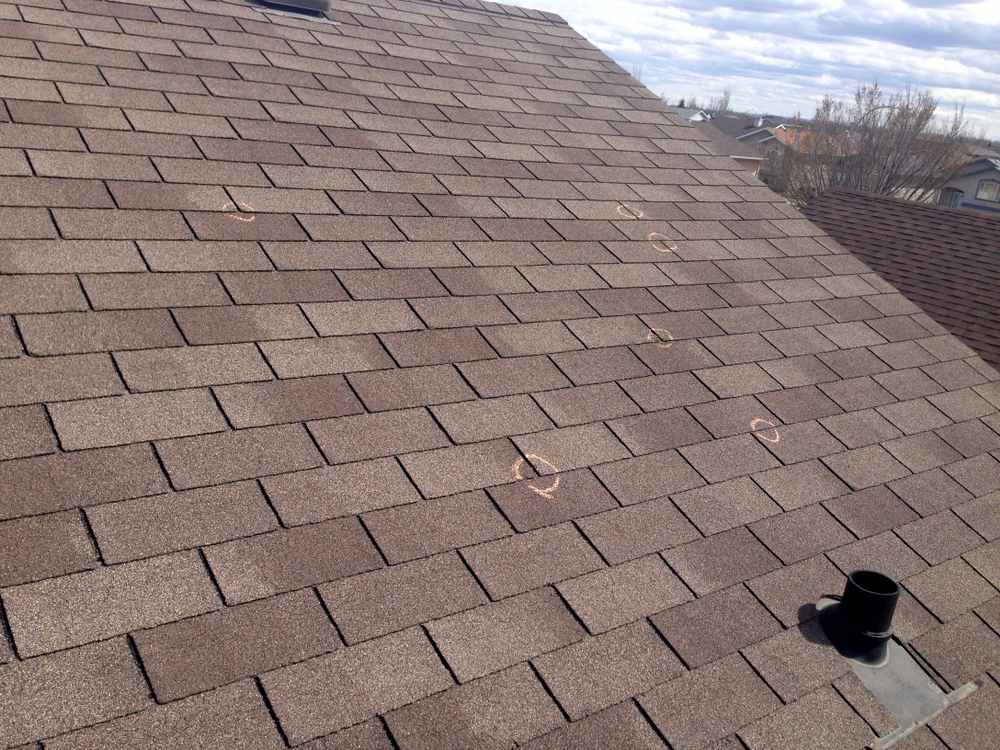
Granule loss is the more visible sign. A hail strike can knock the protective granules off in a small circular patch. That spot looks darker or shinier than the rest of the shingle.
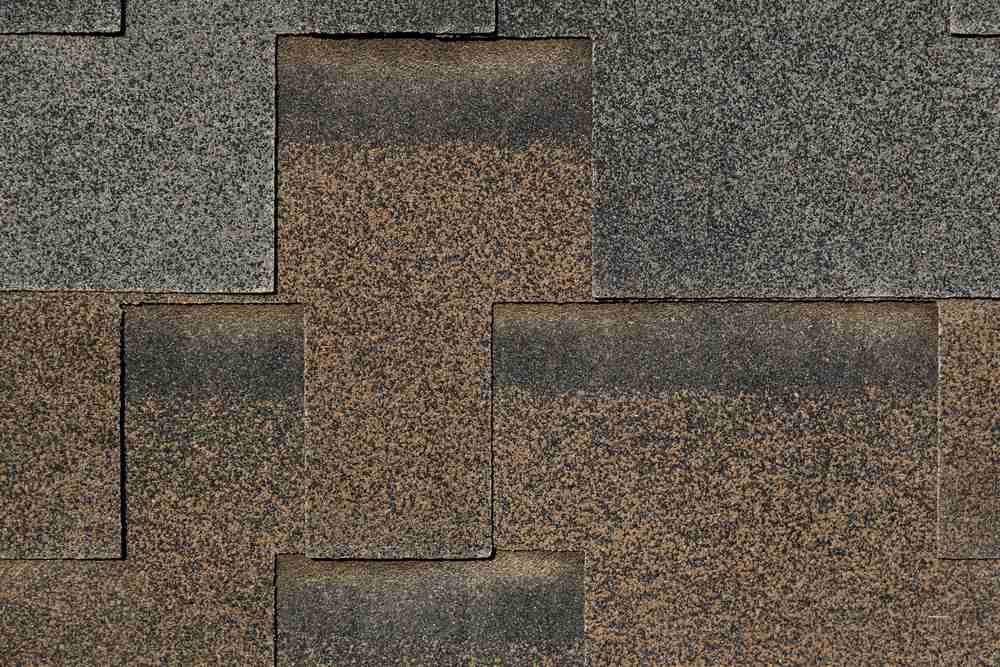
Cracks are the most serious sign. Hail can fracture a shingle straight through, especially on older or more brittle roofs. A cracked shingle no longer blocks water the way it should.

Look for random, scattered marks across a roof slope rather than a single spot. Hail hits shingles unevenly, so damage tends to cluster on the faces that pointed toward the storm.
How to Safely Check Your Roof for Hail Damage From the Ground
Do not climb onto your roof to look for hail damage. Wet or damaged shingles are slippery, and a fall costs far more than a delayed inspection.
Start with a pair of binoculars from your yard. Scan each roof slope for missing shingles, dark patches, or shingles that look curled or displaced.
Walk the perimeter of your home next. Check window screens, sills, and wood trim for small dents or dings. Hail that dents aluminum or wood is usually large enough to damage shingles too.
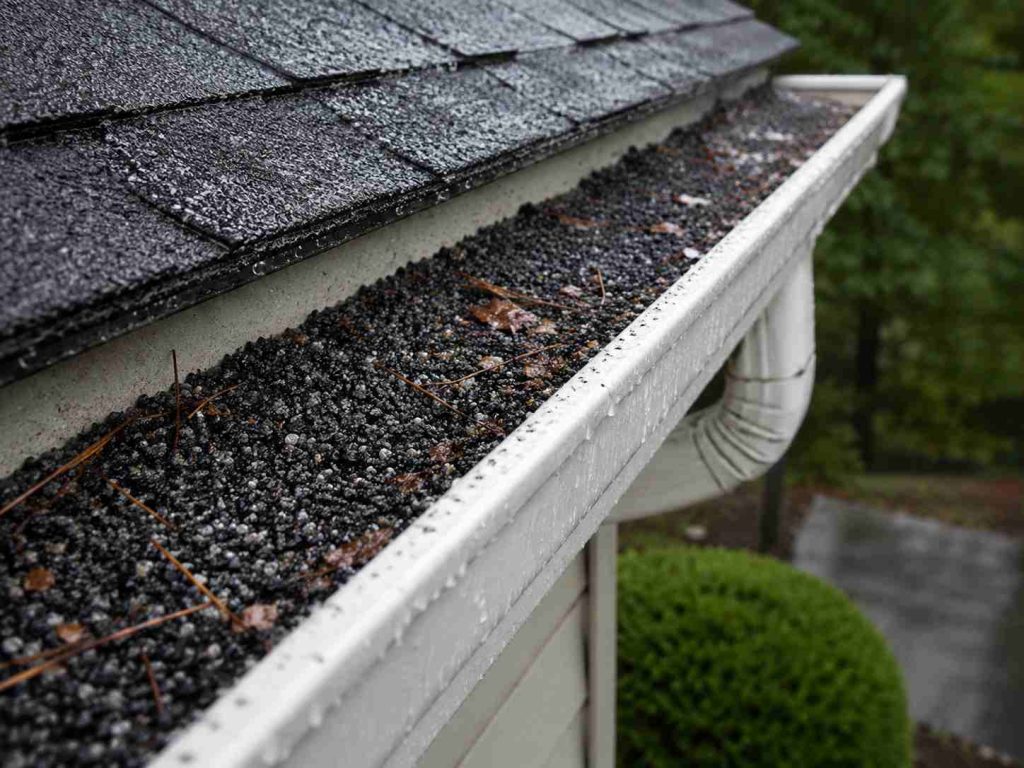
Check your gutters and downspouts. Granules that wash off damaged shingles collect in gutter corners and at the base of downspouts after a storm.
Look at soft metal around your property too. Dented mailboxes, air conditioner fins, or vent caps are a reliable sign of hail large enough to affect your roof.
Hail Size and What It Means for Roof Damage
Not all hail causes roof damage. Size is the biggest factor in whether a storm leaves a mark on your shingles.
- Pea size (about 1/4 inch): Rarely causes shingle damage.
- Marble size (about 1/2 inch): Can begin to dislodge granules on softer or older shingles.
- Quarter size (1 inch): The threshold the National Weather Service uses to classify a hailstorm as severe. This is where meaningful shingle damage typically starts.
- Golf ball size (1.75 inches): Can cause significant damage to shingles, gutters, and siding.
- Tennis ball size (2.5 inches) or larger: Can cause severe damage across the entire roof and exterior.
If your area saw quarter-size hail or larger, treat a roof check as a priority. If hail is common where you live, ask about Class 4 impact-resistant shingles the next time you need a roof.
Other Places Hail Damage Shows Up
Shingles are not the only casualty. A hailstorm strong enough to damage your roof usually leaves marks elsewhere too.
- Gutters and downspouts: dents, cracked seams, or granule buildup
- Flashing around chimneys, vents, and skylights: small dings or bent edges
- Roof vents and pipe boots: cracks or dented caps
- Siding: chipped paint, cracks, or small round dents
- Window screens and sills: torn mesh or dents in the frame
- Outdoor AC unit: bent or dented fins on the condenser
If you spot damage in two or three of these areas, your roof almost certainly took a hit too. That holds even if you cannot see it clearly from the ground.
Hail Damage vs. Shingle Blistering: How to Tell the Difference
Not every mark on a shingle comes from hail. Blistering is a separate issue, and it is worth knowing the difference before you file a claim.
Blistering comes from trapped moisture or a manufacturing defect, not weather. It usually shows up within the first year or two after installation.
Blister marks are small, raised bumps with a slight rim around them, almost like a popped pimple. Hail marks are the opposite. They leave a flat or sunken divot with no raised edge, just missing granules or a soft spot underneath.
Blistering also stays confined to the shingles. Hail damage typically shows up on gutters, vents, and siding at the same time. Hail hits every exposed surface, not just the roof.
This distinction matters for insurance. Storm damage from hail is usually covered under a standard homeowners policy. Blistering from a manufacturing defect is not a storm claim. It falls under the shingle’s manufacturer warranty instead.
What a Professional Roof Inspection Adds
A ground-level check tells you whether a closer look is worth it. It cannot replace a hands-on inspection.
Professional roofers use tools you will not have on hand. Chalk rubbed across a metal surface skips over dents and dings. That makes hail hits easier to spot on flashing and vents.
On the shingles themselves, inspectors often mark off test squares, roughly 10 feet by 10 feet, on each roof slope. Many insurance adjusters look for a minimum number of hail hits inside a test square. That count often determines a full roof replacement instead of a targeted repair.
A trained eye also tells hail damage apart from foot traffic, age-related wear, and blistering. That keeps your claim accurate and your repair scope correct.
French Creek Roofing offers free roof inspections across Mason, OH and the Tri-State Area. Every visit includes a written report and photos.
How to Document Hail Damage for an Insurance Claim
Good documentation speeds up a claim and reduces back-and-forth with your adjuster.
- Photograph each damaged area from multiple angles, including a wide shot and a close-up.
- Place a coin or tape measure next to the damage for scale in at least one photo.
- Note the date of the storm and the date you took the photos.
- Photograph secondary damage too, including gutters, siding, vents, and any dented outdoor fixtures.
- Keep a written list of every area you checked, even the ones with no damage.
French Creek Roofing documents storm damage claims using Xactimate, the same estimating software most insurance adjusters use. That shared format tends to move claims along faster. It also helps keep legitimate damage from getting left off the scope of work.
When to Call a Professional
Call for a free inspection if you notice any of the following:
- Visible granule loss or dark patches on more than a few shingles
- Cracked, curled, or missing shingles after a storm
- Dents in gutters, vents, siding, or your AC unit
- Hail reported at quarter size or larger in your area
- A roof older than 15 to 20 years that has never been inspected
Most homeowners insurance policies set a window for reporting storm damage. Do not wait months to have your roof checked. Confirm the exact deadline with your insurance agent, and keep your documentation ready either way.
Frequently Asked Questions
How Do I Know If My Roof Has Hail Damage?
Look for dark, soft spots on shingles, missing granules, and cracks. Check gutters for granule buildup. Look for dents in soft metal around your property, like vents or your AC unit.
Can I Inspect My Own Roof for Hail Damage?
You can check safely from the ground with binoculars and by walking your property’s perimeter. Climbing onto the roof adds real fall risk, so leave that part to a professional.
Does Homeowners Insurance Cover Hail Damage?
Most standard homeowners policies cover hail damage as a sudden weather event. Coverage details vary by policy, so confirm your specific terms with your insurance agent before filing.
How Soon After a Storm Should I Check My Roof?
Check as soon as it is safe to do so, ideally within a few days. Many policies set a deadline for reporting storm damage, and damage left unaddressed can worsen with rain and wind.
What Is the Difference Between Hail Damage and Normal Wear?
Normal wear develops evenly across the whole roof over many years. Hail damage appears suddenly after a specific storm and shows up as scattered, random marks instead of uniform aging.
Get a Free Hail Damage Inspection in Mason, OH
If you spot any signs of hail damage, do not wait. Small problems get bigger fast once water finds a way in. French Creek Roofing offers free roof inspections across Mason, OH and the Tri-State Area. Our veteran-owned team gives you an honest answer, not a sales pitch. If your roof needs repair or replacement, we handle the insurance paperwork and back every job with a labor warranty. Call us now or request your free inspection online.